Skip to content
Client Industry Profile: Regional Multi-Format Food Retail Chain in South Africa
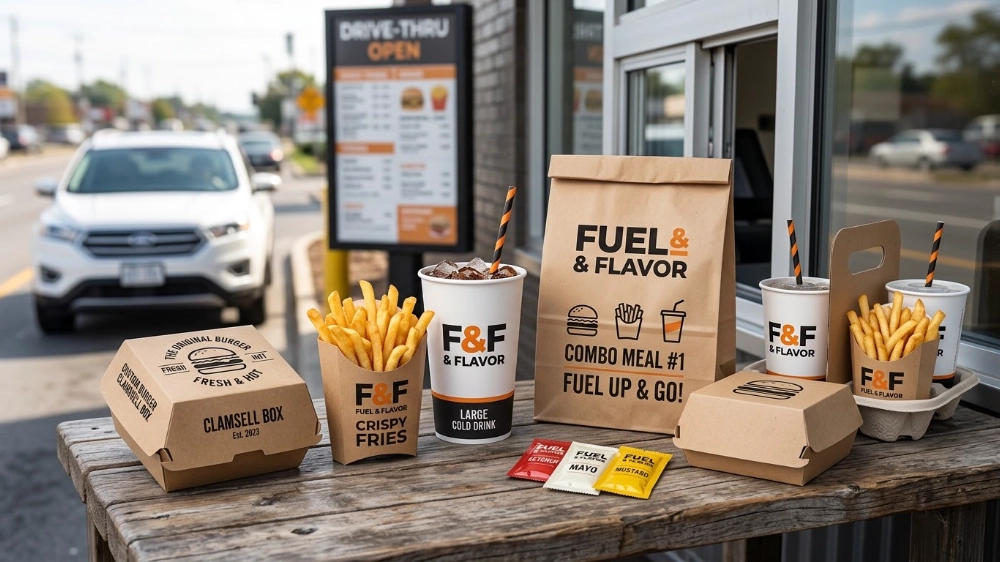
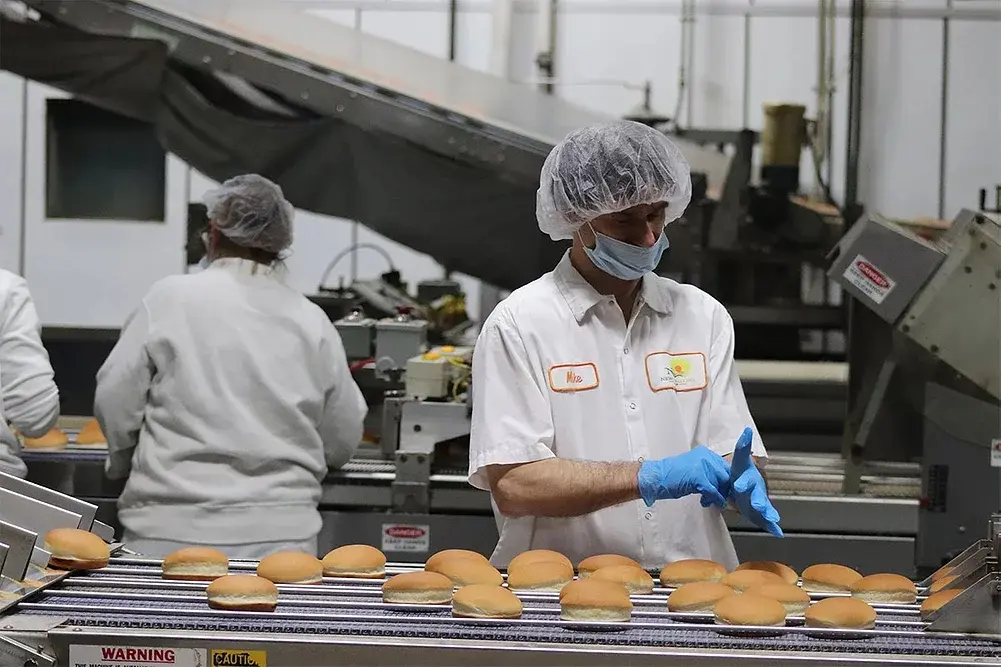
The client is a South African food retail brand operating a hybrid business model combining supermarket retail, bakery, ready-to-eat food, and takeaway services. This format is still relatively emerging in the local market, positioning the company as an early-stage innovator in integrated food retail.
At the time of the project, the brand operated approximately 4 stores, with packaging decisions driven directly by senior management closely involved in both daily operations and brand development. This indicates that packaging was treated not as a procurement task, but as a strategic brand infrastructure decision.
Company Scale & Expansion Stage: Transition from 4 Stores to a Replication Model
The client was in an active expansion phase, planning to open 2 additional large supermarket locations by the end of the year, moving toward a 4–6 store regional chain structure.
This stage typically represents a critical transition in retail operations:
from single-store customization to standardized multi-store replication. At this point, packaging must evolve from isolated design assets into a system capable of supporting consistent execution across multiple locations, product categories, and usage scenarios.

Procurement Trigger: Limitations of Local Packaging Supply Chain
The client originally sourced packaging from local suppliers in South Africa. While convenient, the supply chain failed to support brand-level requirements as the business scaled.
Key issues included:
- Inconsistent print quality across batches
- Limited material stability and structural strength
- Lack of refined structural engineering capabilities
- Inability to support a modern, premium retail brand image
As a result, the client actively searched online (via Google) for a higher-quality packaging partner capable of supporting long-term brand growth.
Competitive Pressure: Brand Imitation Accelerating Packaging Evolution
As one of the early adopters of a hybrid retail model combining grocery, bakery, and prepared food services, the client quickly gained market attention. However, competitors began replicating both the business model and its visual identity.
This created a new strategic requirement:
packaging could no longer be a static solution. It needed to evolve continuously through structural improvements, material upgrades, and visual refinement in order to maintain brand differentiation and resist imitation.

Project Complexity: Existing Design Without Engineering Validation
At the start of the engagement, the client already had a defined packaging direction, including box formats, sizing, quantity planning, and full-surface two-color printing requirements.
However, the design was still in development and lacked critical engineering validation, including:
- Die-line precision and production feasibility
- Structural adaptation for real food usage scenarios
- Risk assessment for full-coverage printing
- Color consistency control in mass production
This created a gap between design intent and industrial manufacturability, requiring technical translation before production.
Solution Approach: A Standardized and Scalable Packaging System by maibao
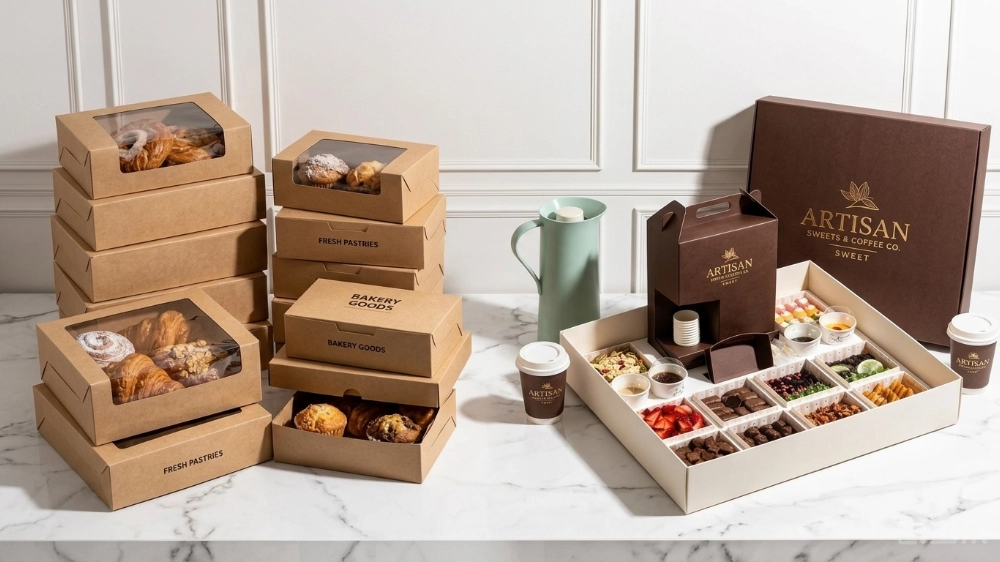
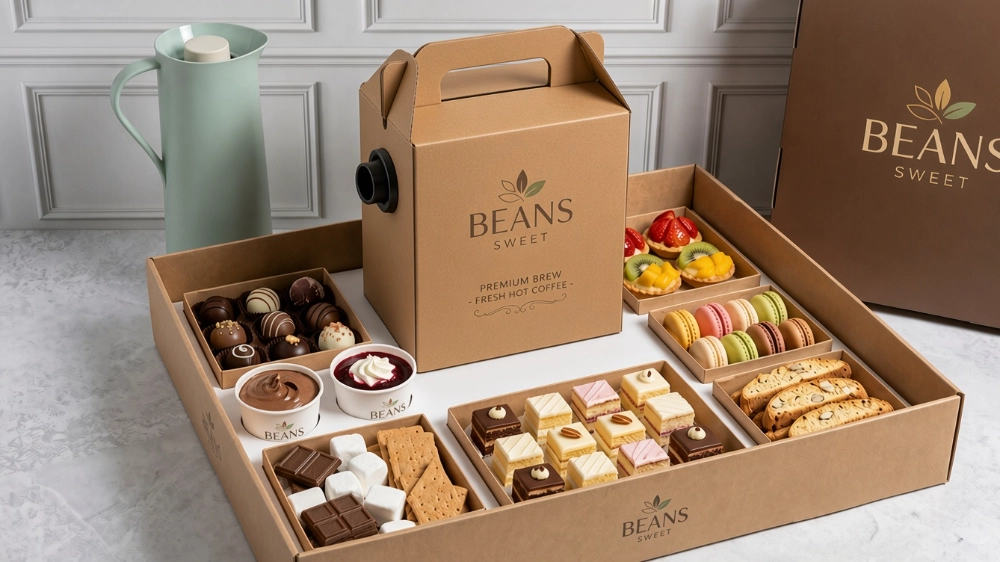
Instead of treating the request as a single packaging order, maibao evaluated the client’s design from a scalability perspective and proposed a unified packaging system.
The solution focused on:
- Food-grade materials with improved rigidity and print stability
- Paper selection optimized for full-surface printing consistency
- Structural reinforcement to reduce deformation and adhesion failure
- A unified size logic across product lines to support future store expansion
The objective was not only to improve packaging quality, but to ensure that the entire system could be reliably replicated across multiple stores and future product lines.

Collaboration Model & Project Timeline: A Video-Led 5-Month Development Cycle (Late 2025)
The project began in late 2025, initiated through inbound inquiry and progressed primarily through video-based consultations, supported by sampling and iterative technical refinement.
Timeline overview:
- Initial inquiry and technical discussions
- Approximately 3 months to develop and approve physical samples
- Multiple video meetings to refine structure, materials, and print feasibility
- Total project duration: approximately 5 months from inquiry to final approval
Throughout the process, maibao was deeply involved before final design confirmation, providing die-line engineering, material selection guidance, and print risk evaluation across internal teams.
This proactive involvement allowed most technical issues to be resolved during the development phase rather than during production, significantly reducing downstream risk.
Ultimately, the client transitioned from cautious evaluation to high confidence, viewing the packaging system as a foundational enabler for future store expansion and expressing interest in extending cooperation into additional product categories.